Refugee Claims at the U.S.–Canada Border: Key Considerations
Contributor: Caitlin Thomas is a Canadian immigration and refugee lawyer out of Ottawa, ON.
Note: Given the rapidly changing treatment of refugee claims in both the U.S. and Canada, anyone considering making a refugee in Canada should contact an experienced legal practitioner.
This post is intended to highlight some of the considerations an individual in the U.S. considering making a refugee claim in Canada must prepare for, and is not meant to be exhaustive nor is it is legal advice. This type of claim is individualized and complex. Therefore, please reach out to an immigration lawyer or legal practitioner experienced in these types of claims for guidance if you have any case-specific questions.
Background on the Safe Third Country Agreement (“STCA”)
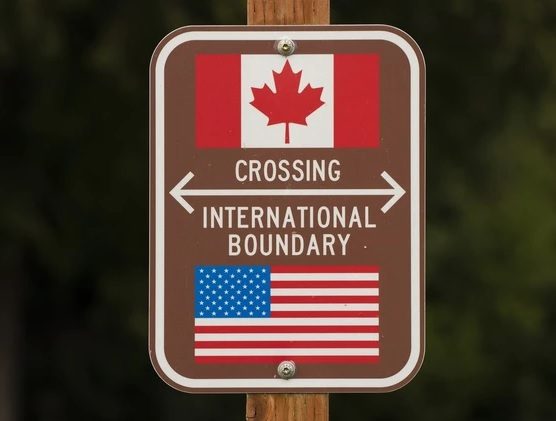
In Canada, refugee claims can be made at ports of entry or online if the individual is already inside the country. If someone intends to make a claim at a land border, they must consider the impacts of the U.S.–Canada Safe Third Country Agreement (“STCA”).
The STCA prevents individuals who have been in the U.S. from making a refugee claim at the border unless they meet an exception. The most common exception is the family member exception.
The Family Member Exception
If someone has an eligible family member in Canada (the “anchor relative”), they may be able to make a refugee claim at the border. Making a claim at the border is only the first step in the Canadian refugee process and is a meeting with Canadian Border Service Agency (“CBSA”) primarily focused on determining eligibility to be referred to the Immigration and Refugee Board (“IRB”).
An eligible family member must:
- Fit the restrictive family definition: spouse, legal guardian, child, parent, sibling, grandparent, grandchild, uncle/aunt, nephew/niece, or common-law/same-sex spouse; and
- Hold an eligible status in Canada: Canadian citizen, permanent resident, protected person, accepted refugee claimant, person with a stayed removal order in certain circumstances, valid work or study permit holder (but not a refused or ineligible refugee claimant), or someone over 18 with a claim referred to the IRB.
Not every relative qualifies. For example, cousins or great-aunts are not eligible anchor relatives.
Proving You Meet an Exception
If you believe you meet an exception to the STCA, it is important to collect the necessary documents. In many circumstances right now for asylum seekers, detention in the U.S. is more likely than not, if one is turned back at their border claim interview. As such, speaking to a legal practitioner is essential to review eligibility and prepare the required documentation.
CBSA has refused claimants for issues such as missing original documents, discrepancies in name spellings, or formatting differences. If you are considering a border claim, consult a legal practitioner.
The Canada–U.S. Border Rights Clinic offers free legal advice about eligibility and provides useful public resources.
Documents to Prepare
Both the claimant and the anchor relative should collect:
- Identity documents: passport, driver’s license, national identity card, etc.
- Proof of family relationship: original birth certificates, evidence of declaration on a Canadian immigration application (e.g., in a BOC), family books, baptism certificates, DNA results, photos, etc.
- Proof of anchor relative’s status: permanent resident card or other valid documentation.
Bring the original documents. If the originals are unavailable, be prepared to explain why and where they are.
Previous Refugee Claims in Other Countries
If someone enters Canada under an STCA exception but has previously made a refugee claim, they must seek legal counsel to understand the risk of prolonged family separation.
If any family member has already made a refugee claim in the U.S., U.K., New Zealand, or Australia, they will not be eligible to have their claim heard in Canada. If they meet an STCA exception, they may still be allowed entry to make a Pre-Removal Risk Assessment (“PRRA”).
Important: If the claimant with an eligible anchor relative has previously made a refugee claim in one of the countries listed above, their spouse or children will not be allowed entry unless they have another eligible anchor relative, independent of that to the primary applicant.
For claimants from countries Canada does not currently deport to (e.g., Sudan, Gaza, Ukraine), entry may be allowed, but a PRRA will not be issued until deportations resume. In the meantime, claimants may access basic healthcare and a work permit but could remain in prolonged legal limbo until their PRRA is heard or they qualify for permanent residency through another route, such as a humanitarian and compassionate grounds application.
The Refugee Claim Process in Canada
Making a refugee claim at the border is only the first step. This stage focuses on eligibility to be referred to the IRB.
For the subsequent steps, claimants eligible for Legal Aid can apply for a certificate to cover the costs for a lawyer to assist them.
Changes Under Bill C-12
The Canadian government has proposed Bill C-12, which, if passed, will significantly impact refugee claim eligibility:
- Individuals coming from the U.S. who do not make a claim at the border, but instead within 14 days of entry will be found ineligible and deported to the U.S.
- Individuals coming from the U.S. who do not make a claim at the border, but instead after 14 days will be ineligible for referral to the IRB. However, they will be given a PRRA.
- Individuals arriving from countries other than the U.S. must make their refugee claim within one year of first landing in Canada. This rule will apply retroactively to all claims made by people who arrived after June 24, 2020, and filed claims after June 3, 2025.
Resources
Given the rapidly changing treatment of refugee claims in both the U.S. and Canada, anyone considering a claim should contact an experienced legal practitioner. Helpful resources include:
- Community Legal Services Ottawa: https://www.clsottawa.ca/
- Integrated Legal Services Ottawa: https://www.legalaid.on.ca/more/corporate/contact-legal-aid-ontario/ottawa-integrated-legal-services-office-ilso/
- Canada–U.S. Border Rights Clinic: https://canadaborderclinic.org/
Immigrant Women Services Ottawa
219 Argyle Avenue, Suite 400
Ottawa, Ontario
K2P 2H4
Tel: 613-729-3145
Fax: 613-729-9308



 Abigail Williams - Treasurer
 Maria Choque - Member
 Hosai Qasmi - Member
 Georgette Morris - Member at large
 Veronica Dingile Mbofana - Member